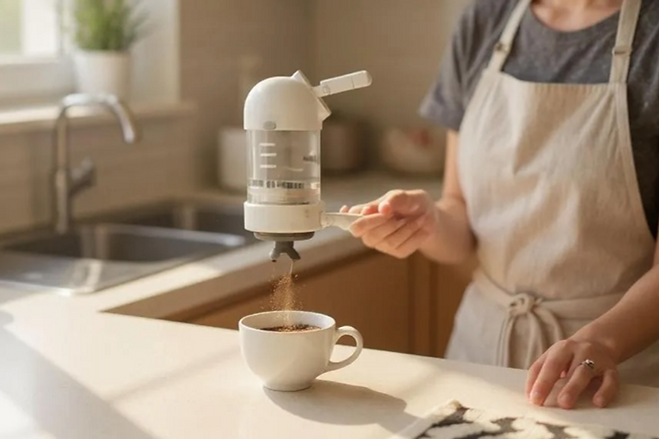
Espresslow
“A slow morning makes for a productive day” Espreslow is a manual espresso maker that embraces the slow effort and attentiveness of its use. Made funtional through simple mechanisms such as its manual pump that are designed for easy access and comprehension. Each cycle of its use requires its complete deconstruction of its parts. Responsive and sensitive materials, such as frosted glass, and concrete are markers of use overtime, and the user’s evolving relationship to the artifact, asking them to reflect on its maintenance, and care. Its design requires careful attention to the manual inter actions, enhanced by mechanical feedback, that result in a quality espresso. Its interactions celebrate a mindful relationship to the espresso maker and to coffee.

.png)
"What we automate, we forget." Most contemporary espresso machines are no more than funtional, they automate complexity to the point of invisibility. Pumps hide pressure. Electronics regulate heat. Interfaces reduce brewing to a button. Ambiguous, shapes meant only to contain whats inside. In doing so, they remove the user from the transformation happening all together. This project addresses that disconnection. It reintroduces manual force, visible thermodynamics, and mechanical feedback, allowing users to feel extraction as it unfolds. The aim is not efficiency—it is presence, to engage the user visually and emotionally with the practice of brewing. "Design should not erase effort. It should dignify it."


Concept
more sustainable coffee systems
This manual espresso maker is a transparent, mechanically honest brewing device designed to transform espresso from a quick caffeine ritual into a deliberate, sensory experience. By exposing the physical forces behind extraction—heat, pressure, resistance—it invites users to engage directly with the act of making coffee. The object is not just a tool, but an artifact that elevates the menaingful ritual of brewing through tactile feedback, visible mechanics, and material clarity.

Parts
The system consists of a borosilicate glass chamber, a vertical manual pressure column with piston assembly, with visible valves, a modular portafilter interface, and a weighted base structure. Some other tools incude a handle that’s trasnsfrom into a stamper, another handle that’s trasnform into cleaning brush. A power cord nestled around a shot cup thats also a heating cup. All while the different textures react when coming in contact with water or heat.
.png)
.png)
Exploded view
Multiuse Tools
Each part is legible, and mechanically honest. Combined tool functions to make them more interesting and disrupt the typical order of things.
Accesible
Mechanically transparent parts made for dissasembly and assembly.
.png)
.png)
.png)
Replaceable multiuse parts. Magnetically aligned modular cleaning brush inside transparent handle.
Simple and accessible technologies.
A dual-purpose shot cup with an embedded heating element underneath.
.png)
Features
Embeded tools
Embed the idea of joy in the effort, understanding, disassembly, cleaning and upkeep into the habit of its use. The design makes it fun to engage with, and requires a manual and skillful effort to use.


Multi Use Tools
The magnetic coonections make dissasembly and assembly fun. The multiuse tools such as the stamper and brush that are also handles and the shot cup thats also a heating cup makes the design that much more interesting to engage with.

Ergonimic Features
The color changing silicone measures pressure and heat in a visual way. The spring loaded pump makes the work more fun through tactile feedback.
Behind every cup of coffee lies a complex and often problematic system. Farmers face unstable prices, climate pressures, and exploitative supply chains that undervalue their labor. These challenges threaten both the people and the environments that sustain coffee. My work is driven by a desire to make this hidden reality visible — to invite others to slow down, understand the care required to produce coffee, and build a deeper respect for the people who grow it. This espresso maker is not just a tool for brewing; it is meant to encourage the kind care and awareness that sparks change.
.png)
Materials that change
Over time
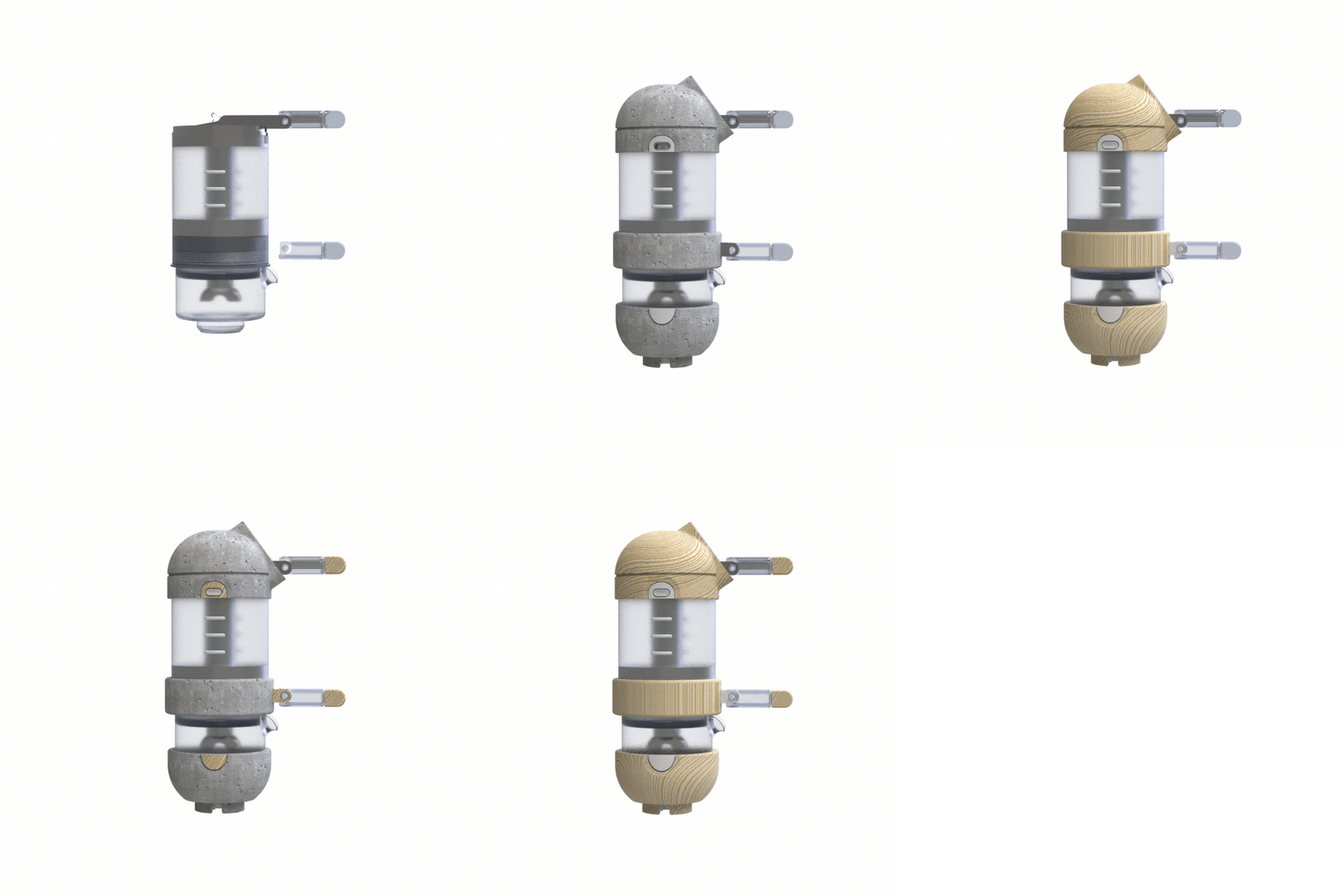
change over time of material considerations, wood, frosted glass, metal. these materials are meant to age beutifully over time, marking a history of their use and bceome a testament to how they are treated and how the user relates to the item
_edited_edited.png)


Customize
and Upgrade
When one of the parts has reached a point of wear beyond the user's satisfaction, they have the option to upgrade to a different material, one that could be less or more responsive to use and time, depending on what the user prefers.
how to use it
how do you engage with an artifact such as this


1. Opening espresslow: The first step is to open the handles so that they are parrales with the ground. The handles are created to click into two locked positions. In the closed position they work together as a single handle. In the open position, they the uppermost handle serves as
a lever for the pump, and the bottom handle, serves to hold the portafilter.
2. Heating the Water
The glass shot cup is embedded with a heating element and cord that wraps around the concrete base. Once connected to power, the heating element will heat the water up to boiling temperature such that it can be used to make the espresso.


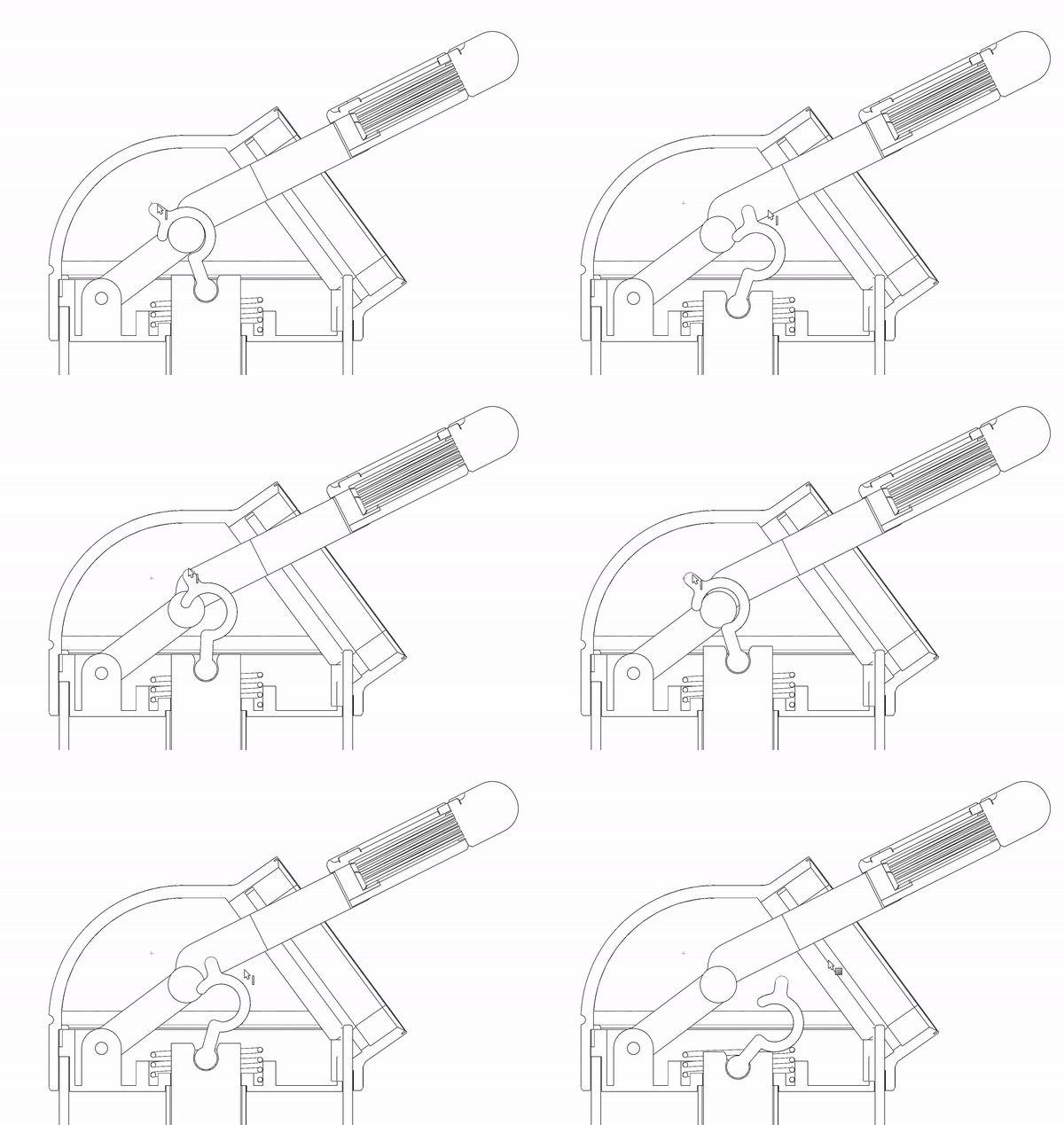


3. Pour Water
Once the water is heated, the pump must be removed in order to access the larger vessel, the water is then poured into it, and the vessel is tightly closed once again. This allows it to be sealed, and the water is then pressurized and pushed through the coffee grounds.
4. Add and Stamp Coffee
While the water cools down to a little under boiling, coffee grounds are added to the portafilter and pressed neatly into a flat, with the stamp tool.


5. Pump Handle
In order to create pressure, the handle must be pumped a number of times until the water has reached a level to which it can pass through the coffee grounds in the portafilter.
6. Voila, Espresso!!!
.png)


Coffee Meanings
This is a coffee table—but not the kind you are used to. It’s built from four interactive stations, forming a collaborative system that takes you through the journey of coffee: from selecting a quality green seed, to roasting, grinding, and finally brewing. Each step invites reflection and participation. This table is a celebration of the process—from production to consumption—and all the effort, people, and rituals in between. This experience invites a group of friends to sit and reflect as they make coffee together. When taking time to appreciate and understand the process, we question the systems behind coffee: Where was this grown? How was it traded? Who was involved? And soon, we make better choices.
Fabrication
The design for this model is made from 3D printed parts, 3D printed ceramic, 3D printed metal, and, laser cut clear acrylic, casted silicone and found glass and hardware.
- For a fully funtional model the chamber and piston and parts of the portafilter and handles are made to be formed from laboratory-grade frosted borosilicate glass for thermal resilience and visual clarity.
- Structural components and custom valves would be CNC-machined from stainless steel for tight tolerances.
- Magnets would be press-fit into machined cavities for alignment precision.
- The heat-sensitive silicone would be electrically bonded to the chamber exterior.
- The shot cup's customs embedded heating element would be insulated within a double-walled structure to direct heat upward into a precise water volume.
- The concrete outer base would be cast and weighted to counteract manual force, providing stability during vertical compression.


.png)
How Does it Work
This machine works via a manual pump mechanism, a series of valves, springs and other visually accesible parts.
1. Water heated in the shot cup is transferred into the glass chamber.
2. As the user applies downward force through the piston, water is compressed within the sealed vertical system. A one-way intake valve prevents backflow.
3. As pressure rises, it buildsup in the chamber and when applied force exceeds the valves threshold, the outlet valve opens, directing water downward through the coffee bed. The piston maintains compression while allowing controlled movement.
4. Resistance increases perceptibly as extraction begins, then softens as flow stabilizes and coffee makes its way through into the shot cup. The user feels pressure build and then release. Nothing is hidden.