
FireAlarm
This fire alarm is a redesign of an object that is almost always ignored until it is needed. Conventional alarms recede into walls, blending into architecture until panic forces attention. This project challenges that passivity.
The alarm maintains a constant white glow in its resting state, making its presence visible even in darkness. It does not hide. It does not wait silently. It exists as a quiet reminder of risk.
When activated, the user lowers a large arrow-shaped form — an unmistakable gesture. As the arrow moves away from its resting magnetic switch, the white circuit breaks. At the lowest point, a second magnetic connection completes, triggering flashing red lights. The transition is not subtle. It is a visible shift from awareness to emergency.


Context
Emergency systems are designed for crisis, yet their everyday presence is minimized. In attempting to be unobtrusive, they become forgettable. In moments of urgency, people hesitate — not because they do not care, but because the object lacks visual authority.
This project addresses that hesitation. It prioritizes instinct over instruction and clarity over discretion. By making the alarm physically directional and continuously illuminated, it reinforces awareness before crisis occurs. It reframes the alarm not as a hidden button, but as an ever-present signal of collective responsibility.


State A and B

In its resting state, a steady white light completes through a magnetic switch, keeping the alarm visibly present even in darkness. When the arrow is pulled, the white circuit breaks. At its lowest point, a second magnetic connection completes, triggering flashing red lights. The transformation is immediate and legible — the object shifts from awareness to emergency.

State A

Resting State:
The arrow is aligned with a magnetic switch that completes the white light circuit. The device emits a steady white glow, signaling readiness and presence.
Activation — Stage One:
When the user lowers the arrow, it separates from the initial magnetic switch. This movement breaks the white light circuit, extinguishing the steady glow.
State B

Activation — Stage Two:
As the arrow reaches its lowest position, internal magnets align with a second switch, completing the red light circuit. Flashing red lights activate, clearly signaling emergency.
The mechanism is binary and legible:
Light.
Break.
Flash.


How does it work
In its resting state, a steady white light completes through a magnetic switch, keeping the alarm visibly present even in darkness. When the arrow is pulled, the white circuit breaks. At its lowest point, a second magnetic connection completes when the arrow opens into its shape, triggering flashing red lights. The transformation is immediate and legible — the object shifts from awareness to emergency.


Its all magnets
The fire alarm is fully powered through magnetic interaction. Magnetic proximity switches trigger circuits on and off, eliminating traditional mechanical buttons. The track that guides the arrow is magnetized, creating a smooth, controlled slide with reduced friction. At the base of the track, clearance, and momentum, allow the arrow to fully open, this too is aided by magnets within the arrow, signaling that it has reached its final position. By using magnets as the core mechanical driver, the system replaces springs and complex internal parts with precise, intuitive magnetic force, reinforcing clarity, safety, and reliability through material logic.

Build
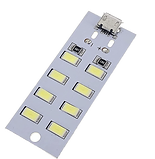
Building the fire alarm required basic circuit building. I designed a two different circuits to be activated at different times. First I modeled them, gathered all my electronics, tested them on a breadboard, and sodered them together within the 3D printed model.




Ideation
The geometry warns.
The light confirms.
The gesture declares.
The final form is not the result of decoration, but of disciplined reduction.

Interaction Drawings
The project began with a series of rapid physical models exploring intuitive emergency gestures—pushing, sliding, twisting, pulling. Many interactions felt natural, but some felt too satisfying, too playful. A fire alarm cannot feel like a toy. Each iteration became an exercise in restraint: removing delight where it created temptation, preserving clarity where it reinforced urgency.


Interaction studies
I translated these tested gestures into graphic studies, abstracting movement into shape.
Interaction Refinment
I translated these tested gestures further into digital graphic studies, gave the movement a place, a shape within another shape. Testing more quickly different shapes, ways to frame the interaction with the outside structure.


Ideation Drawings
The process became less about inventing something new and more about identifying what was already universally legible. The rotated square emerged as a warning form. The arrow became both instruction and action. Layering an arrow within an arrow clarified that the object should not only signal direction—it should require it.
CAD
Only after the interaction was resolved conceptually did I move into CAD and circuit integration. The magnetic switches and dual light system were engineered to support the chosen gesture, not define it. The mechanism follows the meaning.
The final form is not the result of decoration, but of disciplined reduction.


